Attribution
Claims specific to this narrative are named as Matatanya’s account.

A named historical voice · Ditaba tša Balobedu
A narrative of the royal mother, the young heir, the journey with rain regalia and the making of an early Balobedu realm.
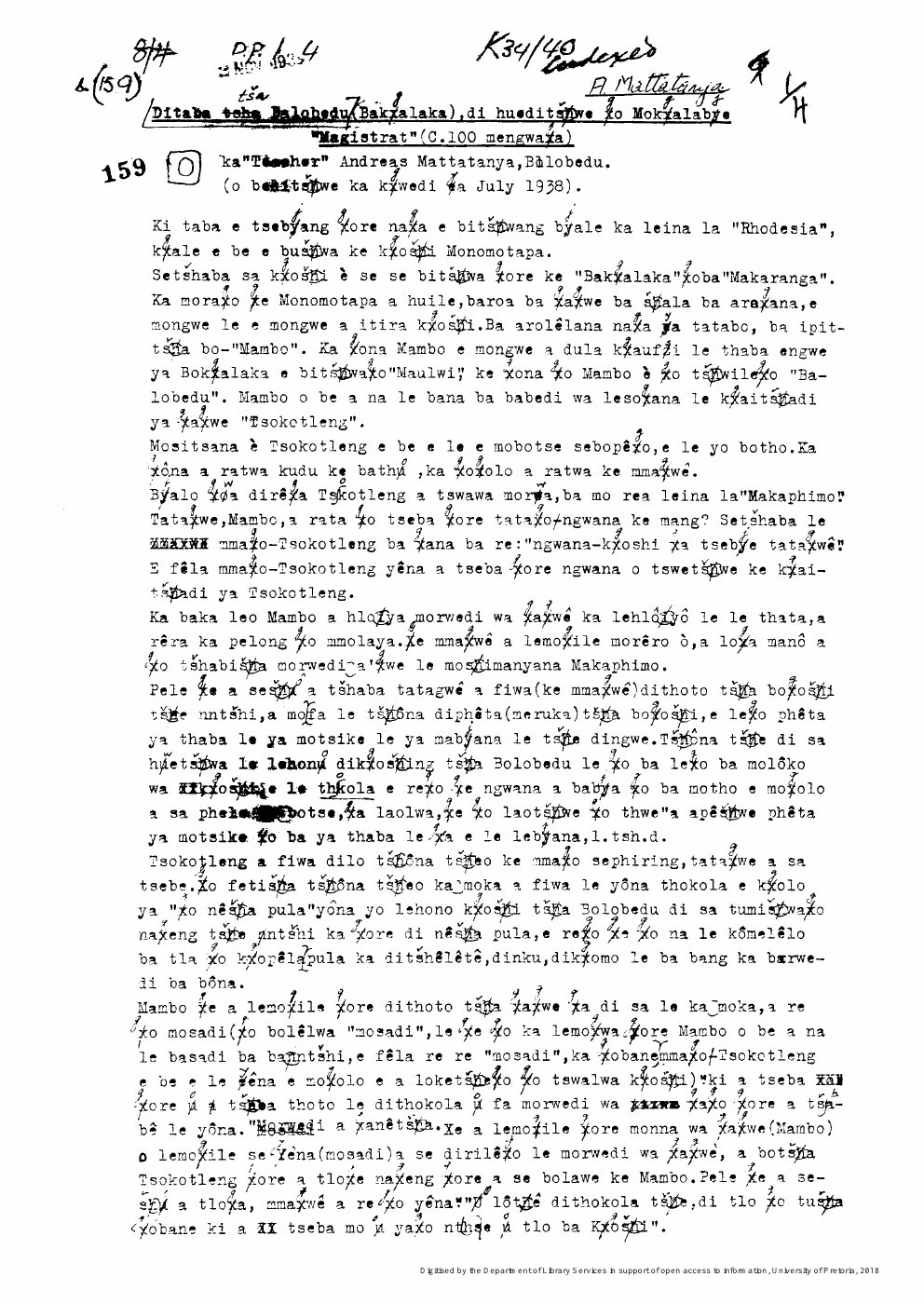
How this page reads the source
The manuscript is presented here as Matatanya’s testimony, not as a seamless replacement for other histories. The surviving scan and transcription contain difficult passages and variant spellings. This page therefore distinguishes what the source says, what other records call the same people or places, and what remains open to oral confirmation.
Claims specific to this narrative are named as Matatanya’s account.
Makaphimo, Makaphele and Phetole are preserved together rather than silently standardised.
Sensitive or unclear passages remain subject to correction by recognised custodians.
The narrative sequence
Bokgalaka · the wider Monomotapa world
Matatanya opens in the country once ruled by Monomotapa, among people rendered in the transcription as Bakgalaka or Makaranga. The royal daughter is Princess Dzungudini, the Mother of the Nation, whose name is rendered Tsokotleng in this transcription. She gives birth to a son named Makaphimo.
A succession crisis
When danger gathers around Dzungudini and her son, her mother secretly prepares their escape. Matatanya’s account places women at the centre of dynastic survival: the grandmother recognises the threat, safeguards the royal inheritance and sends mother and child away with loyal followers.
Name note: This archive treats Dzungudini as the correct name. Tsukutleng and Tsokotleng are retained only when identifying historical transcription spellings.
Reading note: The manuscript’s account of Makaphimo’s paternity is sensitive and textually difficult. It is not treated here as an established genealogical fact.
Royal objects carried in flight
Dzungudini receives royal possessions, beads and sacred instruments, including an object associated with bringing rain. The text says this rain instrument continued to be praised in Bolobedu and that people brought gifts during drought. Rain authority therefore appears before the later institution of the Rain Queens and travels with the founding community.
Bokgalaka → Bokgwa → Phukubje
The group moves through a sequence of temporary settlements. At Phukubje, Matatanya explicitly names people of Modika and Mahasha among the emerging Balobedu community. After doubts about the country, the ruler is asked to bring a great rain. Rain falls, revealing fertile land and confirming sacred and political authority.
Near Tlatja · rendered “Tatsha” in the transcription
After Dzungudini’s death at Nareni, Makaphimo leads the people onward and settles near Tlatja, where they encounter the Seoka. The story describes an exchange of fire-making knowledge followed by conflict and territorial consolidation. It is an origin account of both relationship and conquest and should be read critically alongside Seoka testimony.
Succession
Matatanya states that Mohale succeeded Makaphimo and became ruler of the country. The manuscript then continues through Malatše and later rulers, linking this founding movement to the longer royal succession.
What Matatanya adds
This account is especially valuable because it does more than list rulers. It explains how sacred objects, women’s agency, migration, rain and political authority were remembered as parts of one constitutional story.
Princess Dzungudini and her mother protect the heir, the people and the royal inheritance.
Rain regalia belongs to the migration story and precedes the later female succession.
Modika and Mahasha communities are named during the journey; Mohale appears in the succession.
Settlement, fertile land, rain and relations with existing communities shape the early realm.
Names across the archive
These equivalences are editorial cross-references, not claims that every manuscript tells an identical story.
Dzungudini is the preferred and correct name for the Mother of the Nation; the other forms are transcription variants.
Variant names used for the early ruler across supplied records.
The place associated with Mohale and the early royal centre.
Named groups already present during the migration narrative.
Read the primary record
This interpretive page is a guide, not a substitute for the source. The original orthography, repetitions and ambiguities remain essential evidence.